
Executive Function and Social-Emotional Support for Teens
A clearer path forward—built around how your teen’s brain actually works.
Teenagers are managing more than assignments and schedules. They are learning how to understand themselves, handle growing expectations, navigate relationships, make decisions, recover from stress, and prepare for greater independence.
For neurodivergent teens, these demands can become especially heavy. A teen may know what they need to do and still struggle to begin. They may care deeply and still miss deadlines, shut down, become overwhelmed, or lose track of what comes next.
Teen Wayfinding offers neurodivergent-affirming, strengths-based support for teens who need more than another planner, reminder, or instruction to “try harder.” Together, we identify what is happening, understand what is getting in the way, and build practical strategies that fit the teen—not the other way around.
Your Teen Is Not the Problem
Executive functioning challenges are often misunderstood as laziness, defiance, carelessness, or lack of motivation. Social-emotional differences may be treated as overreacting, avoidance, or unwillingness to cooperate.
But behavior is information.
A teen who appears stuck may be overwhelmed, unsure where to begin, afraid of getting it wrong, depleted from masking, or trying to meet expectations without the support their nervous system and brain need.
Teen Wayfinding slows the process down long enough to ask better questions:
What is happening beneath the struggle?
What is the teen already doing well?
What demands are exceeding their current capacity?
What support, skill, accommodation, or environmental change would help?
What feels meaningful and realistic to the teen?
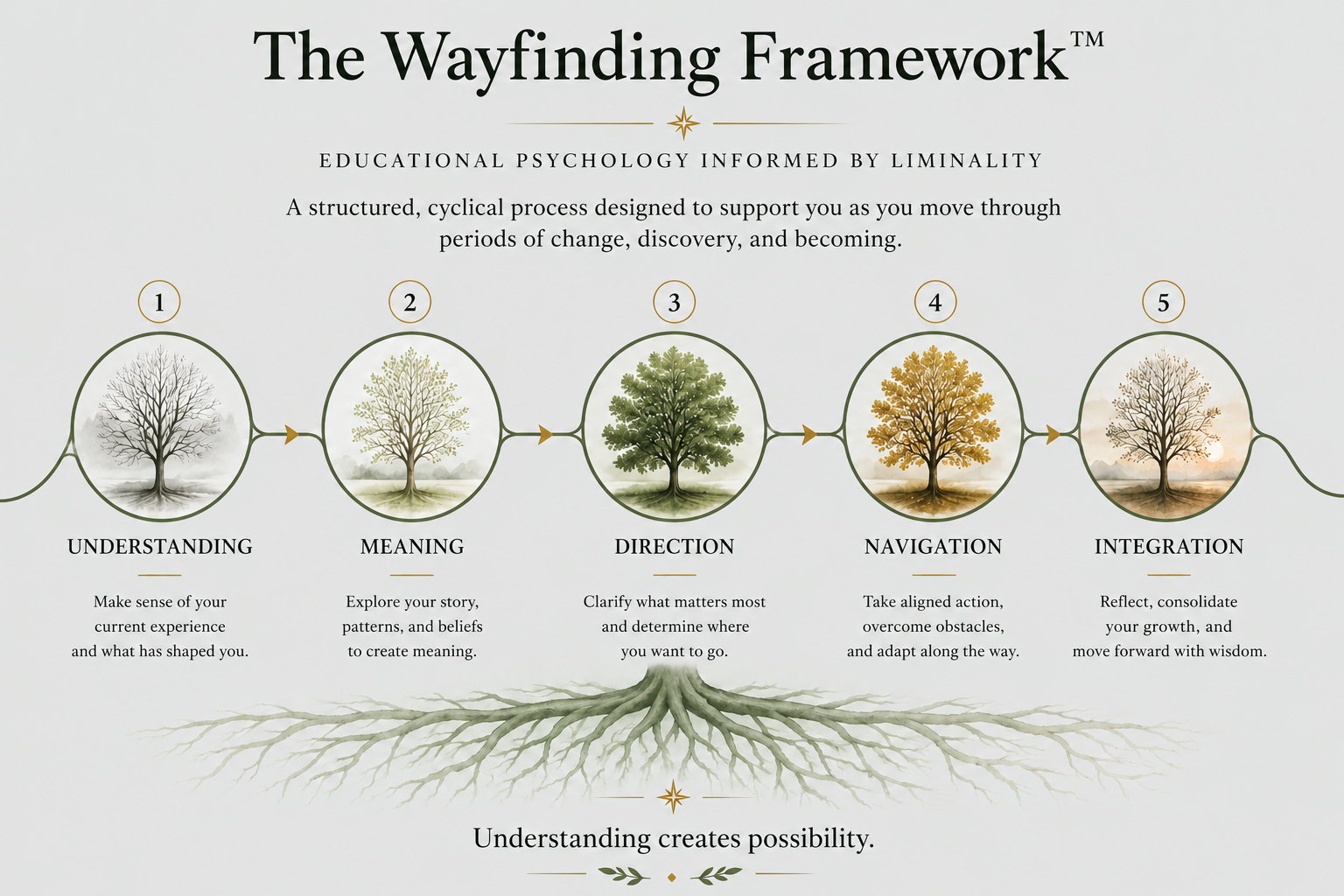
Understanding creates possibility.
Who Teen Wayfinding Is For
Teen Wayfinding may be a good fit for teens who:
Have ADHD, Autism, AuDHD, anxiety, learning differences, or executive functioning challenges
Are diagnosed, self-identified, questioning, or do not yet have a formal diagnosis
Feel overwhelmed by school, responsibilities, relationships, or transitions
Have difficulty starting, organizing, prioritizing, completing, or turning in work
Lose track of time, materials, instructions, or multi-step tasks
Experience shutdown, avoidance, perfectionism, emotional flooding, or burnout
Struggle to recognize or communicate what they need
Want support with friendships, boundaries, self-advocacy, or communication
Are preparing for high school, graduation, college, work, or greater independence
Want to understand themselves without being pressured to become someone else
This service is designed for teens who would benefit from a supportive thinking partner and a practical place to build skills at their own pace.
The Four Anchors of Teen Wayfinding
Each session returns to four consistent areas. The focus changes as the teen’s needs change, but the anchors provide a predictable structure.
1. Regulation — What does my system need right now?
Before a teen can plan, problem-solve, communicate, or complete a task, their brain and body must have enough capacity to participate.
Teens learn to:
Notice stress, energy, sensory needs, and signs of overload
Identify what helps them feel grounded, alert, or restored
Understand the connection between regulation and executive functioning
Build realistic strategies for shutdown, frustration, anxiety, and transitions
Recognize when the answer is support or recovery—not more pressure
2. Life Skills — What would make daily life work better?
We practice the executive functioning and independence skills that matter in the teen’s actual life.
Support may include:
Task initiation and follow-through
Time awareness and time management
Planning, prioritizing, and sequencing
Organization of materials, spaces, and digital systems
Working memory and remembering responsibilities
Flexible thinking and adapting when plans change
Attention, focus, and managing distractions
Self-monitoring and recognizing progress
Personal routines, appointments, transportation, money, and household responsibilities
School-to-work or postsecondary readiness
3. Problem Solving — What is getting in the way, and what could help?
Instead of assuming a teen is unwilling, we investigate the stuck point together.
The teen is supported to:
Define the actual problem
Separate expectations from priorities
Notice patterns in when something is easier or harder
Break challenges into smaller, clearer parts
Generate options without searching for one “perfect” answer
Practice asking for help, accommodations, or clarification
Repair plans that did not work without shame
Build confidence through supported decision-making
4. Planning Ahead — What is my next realistic step?
Insights become useful when they can travel into daily life. Together, we create a plan that is visible, specific, flexible, and supported.
Teens learn to:
Choose a manageable next step
Decide when, where, and how it can happen
Anticipate likely barriers
Match strategies to their energy and capacity
Set reminders and create external supports
Develop backup plans for difficult days
Reflect, adjust, and try again
The goal is not a perfect system. The goal is for the teen to develop a growing ability to understand their needs, choose supportive strategies, and find their way forward.
What a Session May Look Like
Sessions are collaborative and responsive to the teen’s current capacity. A typical session may include:
Arrive and regulate: Check energy, stress, sensory needs, and readiness.
Choose the destination: Agree on one useful focus for the session.
Explore a real-life challenge: Identify the task, interaction, or situation that feels stuck.
Notice patterns: Understand what makes the situation easier, harder, or more draining.
Build or practice a skill: Create a checklist, organize a system, draft a message, rehearse a conversation, set up reminders, or begin the first step together.
Plan ahead: Choose a realistic next step and decide what support will make it more accessible.
Reflect and close: Name what feels clearer and support the transition out of the session.
Talking is never the only option. Depending on the teen, sessions may use visual tools, writing, shared planning, movement, metaphors, examples, or hands-on practice.
The Teen’s Voice Matters
Teen Wayfinding is done with the teen, not to the teen.
The teen is treated as the expert on their own experience. Goals are developed collaboratively and should feel relevant to their life—not simply designed to make them easier for adults to manage.
Caregivers bring essential knowledge and can be important partners. At the same time, teens need developmentally appropriate privacy and a space where honest reflection is possible. At the beginning of services, we will discuss:
How caregiver input will be gathered
What information will remain private
What progress updates may include
When safety concerns must be shared
How caregivers can support strategies without taking over
The aim is a respectful partnership that increases connection, shared understanding, and the teen’s growing independence.
What Caregivers May Notice Over Time
Growth will look different for every teen. Possible changes include:
Greater awareness of what helps and what gets in the way
More specific communication about needs and support
Less shame surrounding executive functioning challenges
Increased ability to begin or return to difficult tasks
More realistic planning and use of external supports
Improved recovery after stress, setbacks, or changes in plans
Stronger self-advocacy and boundary-setting
More confidence making decisions and solving problems
A growing sense of ownership over routines, responsibilities, and goals
The outcome is not certainty or independence without support. It is greater self-understanding, self-trust, and confidence navigating life with the right support.
Ready to Help Your Teen Find Their Way Forward?
Whether your teen is feeling overwhelmed, stuck, burned out, uncertain about themselves, or struggling with school, relationships, or daily responsibilities, they do not have to navigate it alone. Together, we can understand what is getting in the way and build a path that works for them.